Chandigarh was built as a replacement for Lahore, which became part of Pakistan after the 1947 Partition. Prime Minister Jawaharlal Nehru commissioned architect Le Corbusier to create India's first planned modern city — a symbol of freedom, progress, and a new Punjab. Construction began in the early 1950s, and by 1966, Chandigarh became the shared capital of both Punjab and Haryana.
History is often written in ink, but Chandigarh was written in concrete and heartbreak. To understand why this city exists, we must go back to August 1947 — when the borders were drawn, families were split, and Punjab lost its heart.
1. The Ghost of Lahore
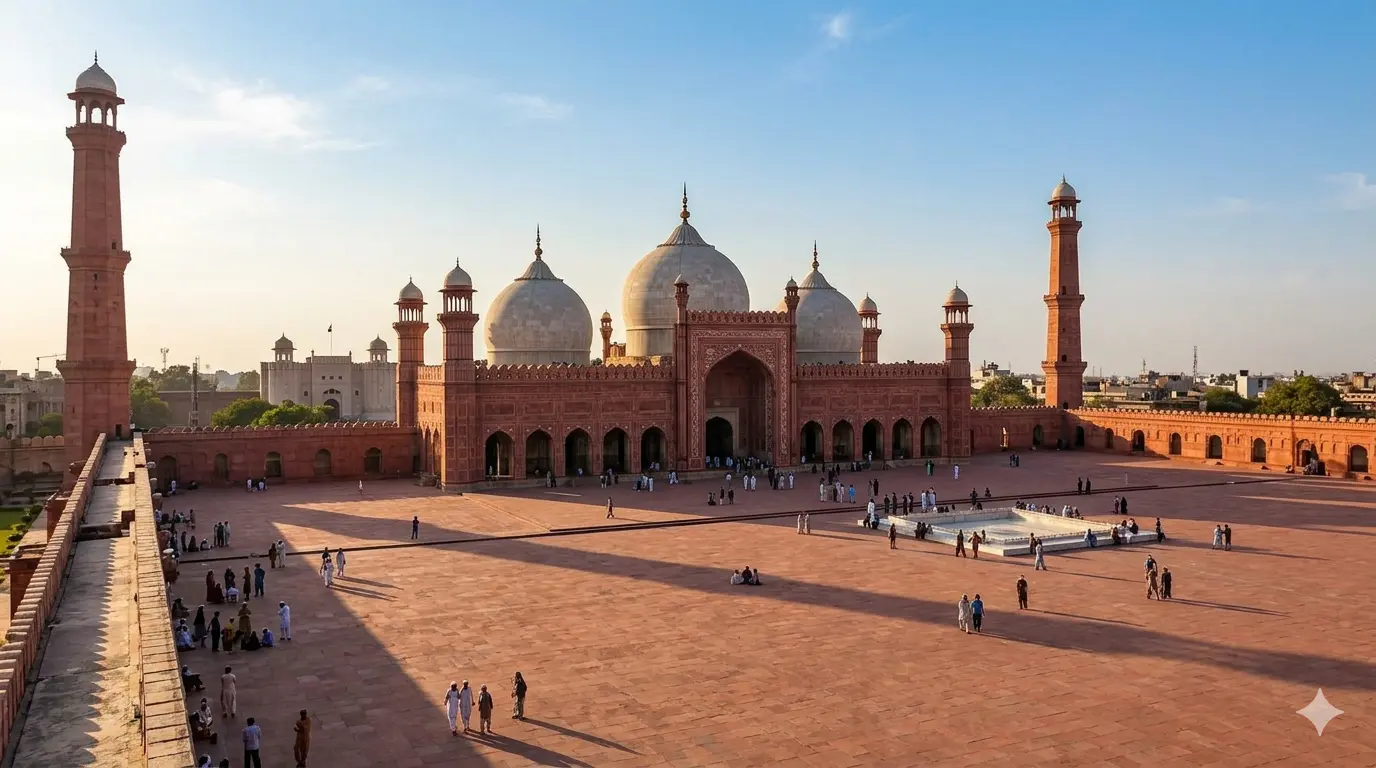
Before 1947: Lahore Was Punjab
For centuries, Lahore was the beating heart of Punjab. It wasn't just the administrative capital — it was the cultural, literary, and spiritual center. The Mughal Gardens, the grand Badshahi Mosque, the vibrant bazaars — Lahore was everything.
- Capital of undivided Punjab
- Home to universities, courts, and government offices
- The cultural hub for Punjabi literature and arts
- A symbol of unity for Punjabis across religions
But when Sir Cyril Radcliffe drew the Partition line in August 1947, Lahore went to Pakistan. East Punjab (the Indian side) was left without a capital, without identity, and without a home.
The Partition triggered one of the largest mass migrations in human history. Over 10 million people crossed the India-Pakistan border. Punjab bore the deepest scars — entire families were separated, communities destroyed, and over 1 million lives were lost in the violence.
2. Nehru's Vision: "Unfettered by Traditions"
After Partition, India's first Prime Minister, Jawaharlal Nehru, faced a critical choice. Should the government operate out of an existing city like Jalandhar, Amritsar, or Ambala? Or should they build something entirely new?
"Let this be a new city, symbolic of the freedom of India, unfettered by the traditions of the past, an expression of the nation's faith in the future."
Nehru wanted more than just a replacement capital. He wanted a statement. A city that represented modern India — scientific, planned, egalitarian, and forward-thinking. He wanted to prove to the world that even after the trauma of Partition, India could build something beautiful.
Scientific Thinking
Nehru believed cities should be designed with logic, not tradition. Chandigarh was his lab for modernist urban planning.
Social Equality
Unlike old cities with segregated neighborhoods, Chandigarh was designed to promote equality — no separate areas for "rich" or "poor."
Green Vision
The city was planned with large parks, tree-lined streets, and green belts — a "Garden City" in the true sense.
Organized Layout
Sectors, wide roads, separate residential and commercial zones — everything was planned before the first brick was laid.
3. Le Corbusier: The Architect Who Designed a Human Body
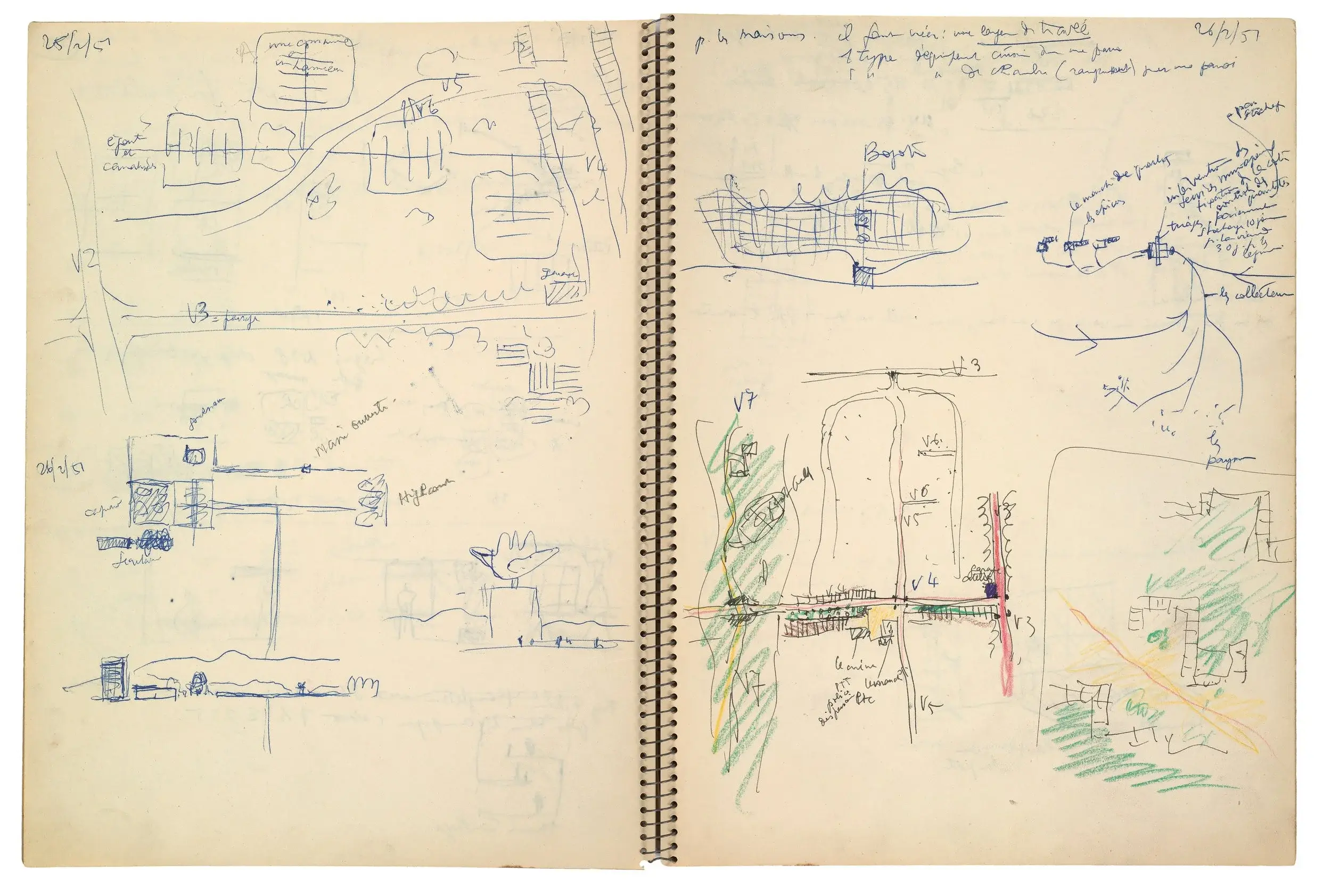
The Human Body Concept
While American architect Albert Mayer started the initial plan, it was the legendary Swiss-French architect Le Corbusier who gave Chandigarh its final, world-famous design.
Le Corbusier imagined the city as a living organism — a human body:
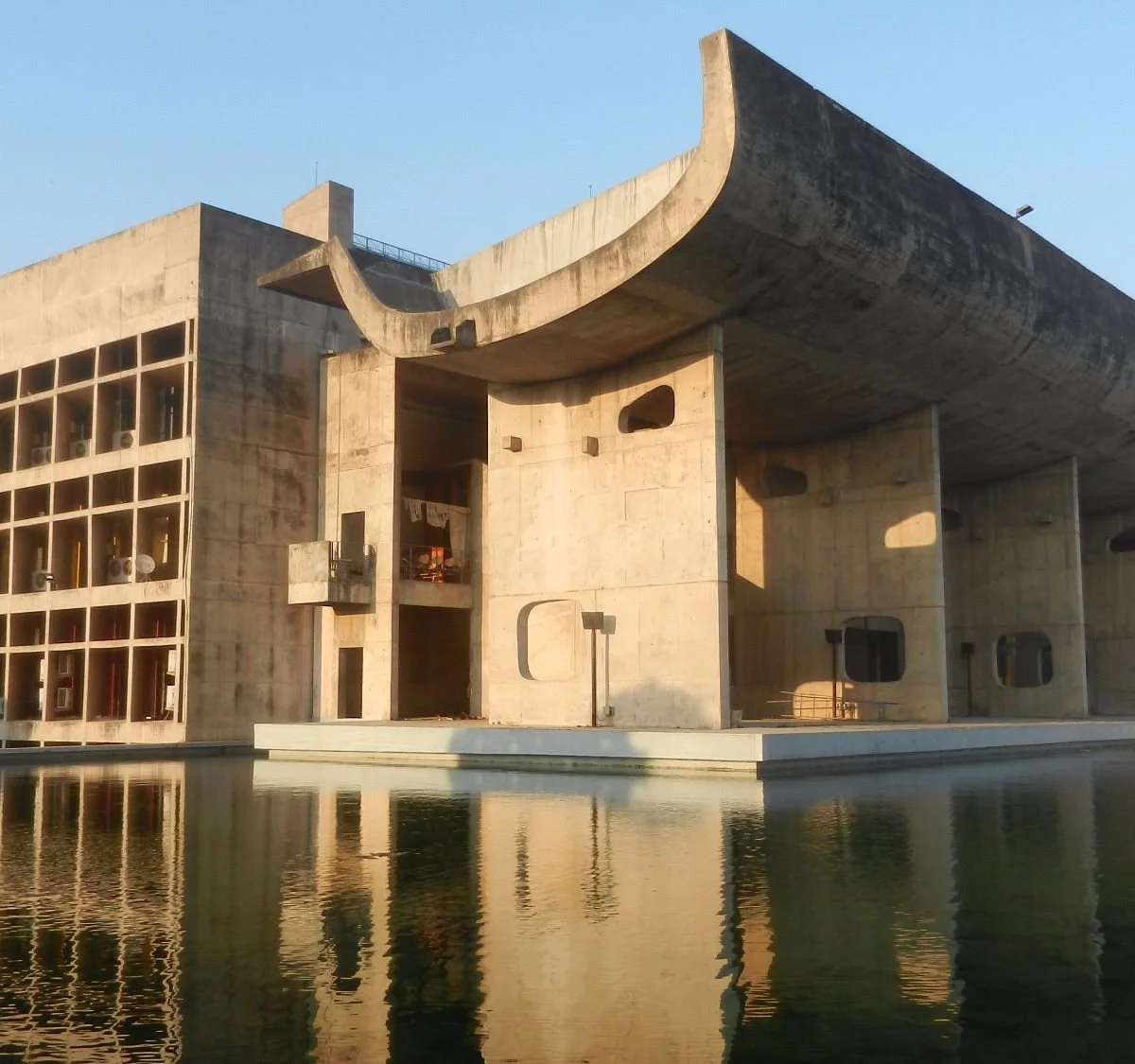
- The Head: Capitol Complex (Sector 1) — housing the government and judiciary
- The Heart: City Centre (Sector 17) — the commercial and social hub
- The Lungs: Leisure Valley and green belts — the city's breathing spaces
- The Circulatory System: The 7V road network — arteries connecting the city
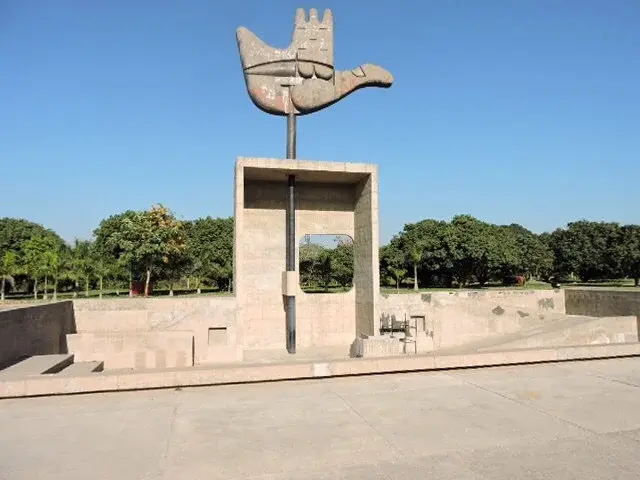
Le Corbusier didn't just design buildings. He designed a philosophy. Every sector, every road, every park had a purpose. Chandigarh became a UNESCO World Heritage Site in 2016, not just for its architecture — but for its vision.
4. Timeline: From Dream to Reality
Partition of India
Punjab is divided. Lahore goes to Pakistan. East Punjab needs a new capital. Shimla serves as a temporary administrative base.
Site Selection
A 114-square-kilometer site at the foothills of the Shivalik Hills is chosen. The area includes 50 villages that will be relocated.
Le Corbusier Arrives
The Swiss-French architect takes over the project. He redesigns the entire city based on his "Modulor" proportions and human body concept.
Construction Begins
The first sectors are laid out. Thousands of laborers, engineers, and artisans work around the clock. The city starts to take shape.
Punjab Reorganization
Punjab is divided again. Hindi-speaking regions become Haryana. Chandigarh becomes a Union Territory and the shared capital of both states.
UNESCO World Heritage Site
The Capitol Complex is recognized as a UNESCO World Heritage Site for its "Outstanding Universal Value" in modernist architecture.
5. Why Was This Location Chosen?
The site at the foot of the Shivalik Hills wasn't randomly picked. It was chosen after careful analysis of geography, climate, accessibility, and water supply.
Centrality
It was geographically central to the then-undivided East Punjab, making it accessible from Amritsar, Jalandhar, Ludhiana, and Ambala.
Climate & Soil
The fertile land near the hills provided good drainage, clean air, and a pleasant climate — ideal for a "Garden City."
Water Supply
The nearby Sukhna Choe (seasonal stream) could be dammed to create Sukhna Lake, ensuring fresh water supply and recreational space.
Space for Expansion
Unlike crowded old cities, this was open land where the entire city could be planned in advance, with room to grow.
6. 1966: One City, Two States
In 1966, the Punjabi Suba Movement led to the reorganization of Punjab. The Hindi-speaking areas in the southeast became the new state of Haryana.
Both states wanted Chandigarh as their capital. Instead of dividing the city or choosing one over the other, the Central Government made a unique decision: Chandigarh would remain a Union Territory, governed directly by the President of India, and serve as the shared capital of both Punjab and Haryana.
Chandigarh is the only city in India that serves as the capital of two states. It's also one of the few Union Territories with its own High Court and legislature (though the legislature has limited powers).
To this day, the debate continues. Punjab wants Chandigarh to be handed over entirely. Haryana disagrees. The city remains a shared symbol — and a political puzzle.
7. The Puadh Connection: Before the Concrete
The Land Before Chandigarh
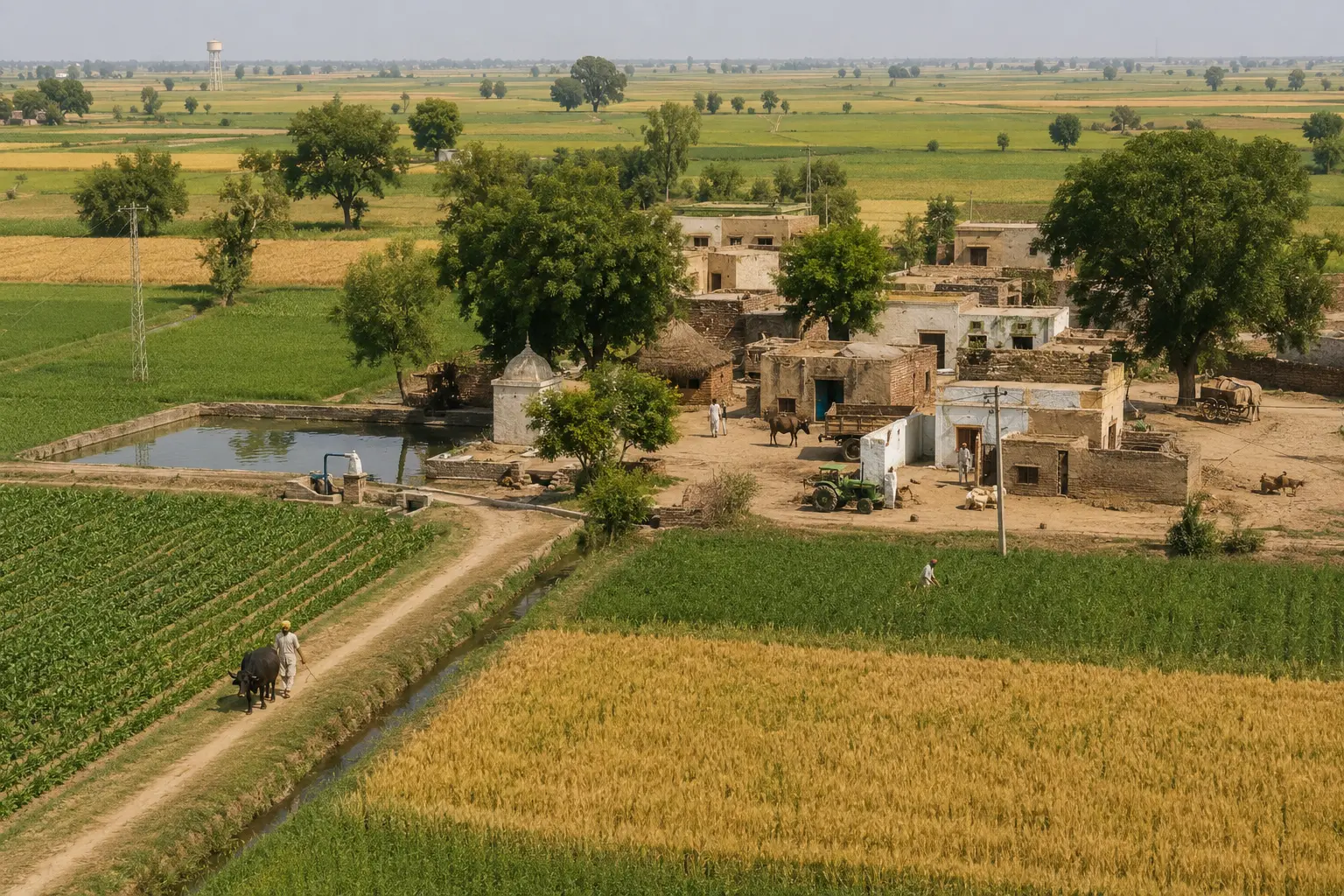
Before the architects arrived, this land was home to nearly 50 villages. The people here spoke Puadhi — a distinct dialect of Punjabi unique to the Puadh region (the area between the Sutlej and Ghaggar rivers).
When construction began, these villages were relocated. The land was cleared. The fields became sectors. But the cultural roots remain.
For us at the Puadh Punjabi Podcast, Chandigarh isn't just a "planned city." It's the intersection where ancient Puadhi culture meets modern ambition. It's where our grandparents' fields became India's first modern capital.
While the world sees Chandigarh as Le Corbusier's masterpiece, we see it as our land — reimagined, rebuilt, and still rooted in the soil of the Puadh.
Want to Dive Deeper into Chandigarh's Culture?
We explore the stories, people, and history of the Puadh region in depth. From Partition survivors to modern-day changemakers — it's all on the Puadh Podcast.
Listen to Episodes